
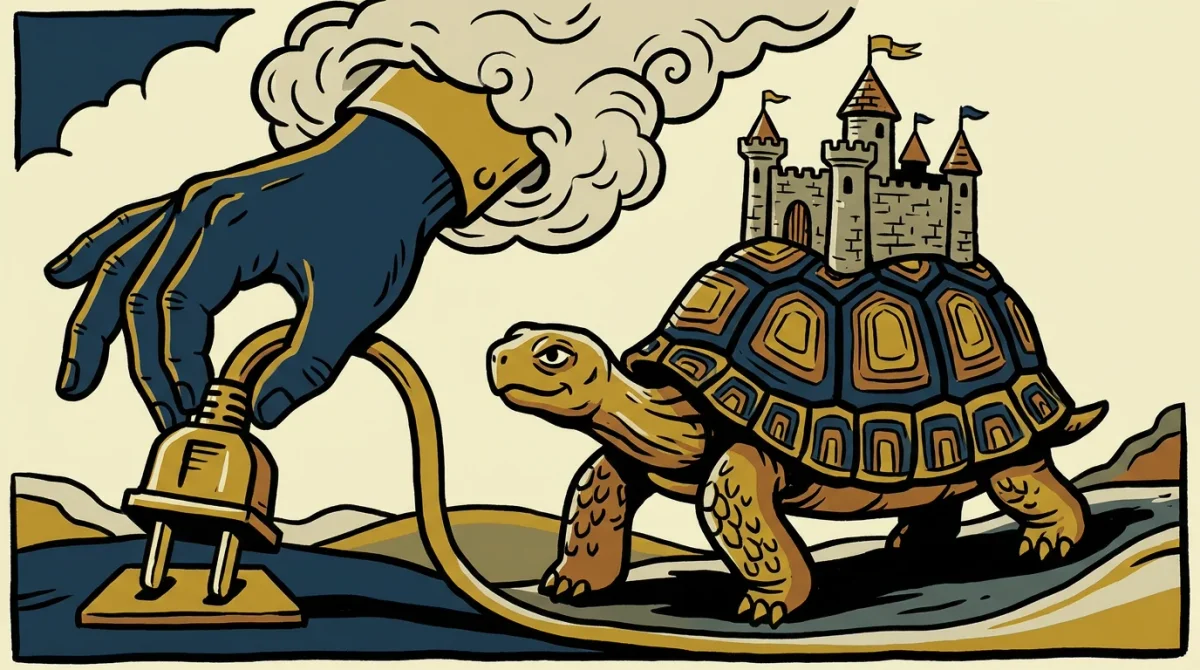
AI sovereignty means controlling the AI you depend on: where it runs, what it learns from you, and who can change the rules. Countries spend billions to get it, and the same reasons apply to your business and your work.
Countries are racing to own their AI
Governments refuse to depend on someone else’s AI. Nvidia says at least 20 countries are building what it calls sovereign AI. Its sales to those governments roughly tripled last year, to more than $30 billion. They want sensitive data kept at home. They also want no foreign company able to raise prices, change terms, or cut them off.
Most still depend on one American chipmaker, so real independence stays hard. But the instinct is right, and it reaches beyond countries.
The same risks apply to you
Your business runs on more AI every month, so you face the same risks on a smaller scale. Your AI company can change its terms. Last year Anthropic switched consumer chats from never training to training by default unless you opt out. Your AI company can read what you store with it. Pressure can change its policies, as this year’s fight between Anthropic and the Pentagon showed.
The companies need not act in bad faith. When you depend on their AI, their decisions become your problem.
Three questions test your AI sovereignty
Can you leave? If you switched providers tomorrow, could you take your data, your setup, and what your AI learned about your work? If not, you’re locked in.
Does what you teach it stay yours? Your pitches, prices, and lessons are some of your most valuable know-how. If they train a model your competitors also use, they aren’t fully yours.
Who can change the rules? If a company can change what your AI does, what it costs, or who sees it without asking you, you don’t fully control it.
Open models make sovereignty possible
You don’t need to build a model. Open models now handle most everyday work well. Anyone can run them, so you choose where they run and switch providers without starting over. Countries want their own AI for the same reason, and a business can afford this version.
Sovereignty works better with trusted peers
Countries form alliances because independence works better with trusted partners, and people work the same way. Peers doing your work teach you what no public model has seen, and that lesson is the most valuable thing you can give your AI. We explain why in Asymmetric AI.
Start by finding where your AI runs
- Find out where your AI runs. Learn which company holds your conversations and what its policy says about training.
- Keep your know-how in files you own. Notes and documents you control outlast any chat history.
- Prefer AI you can move. Choose open models and providers you could leave without losing your work.
- Turn off training in consumer apps. The setting usually sits under privacy.
Bottom line: AI sovereignty means controlling the AI you depend on, and it isn’t only for countries. Ask whether you can leave, whether what you teach it stays yours, and who can change the rules. PageLines runs on open models and gives each member an AI that works only for them, inside a community of people who share what works. See how it works.
Common questions
What is sovereign AI?
Sovereign AI is AI a country builds and controls itself: the data centers, the models, and the data. Countries want it to keep sensitive data at home and to avoid a foreign company cutting them off or overcharging them.
What does AI sovereignty mean for a business or a person?
You control the AI you depend on. You know where it runs, you keep what you teach it, and no one can change the rules or cut you off without your say.
Does open-source AI give you sovereignty?
Open models are the start. You can run them on computers you choose and switch providers without starting over. You still need to keep your data and setup in a form you can move.