
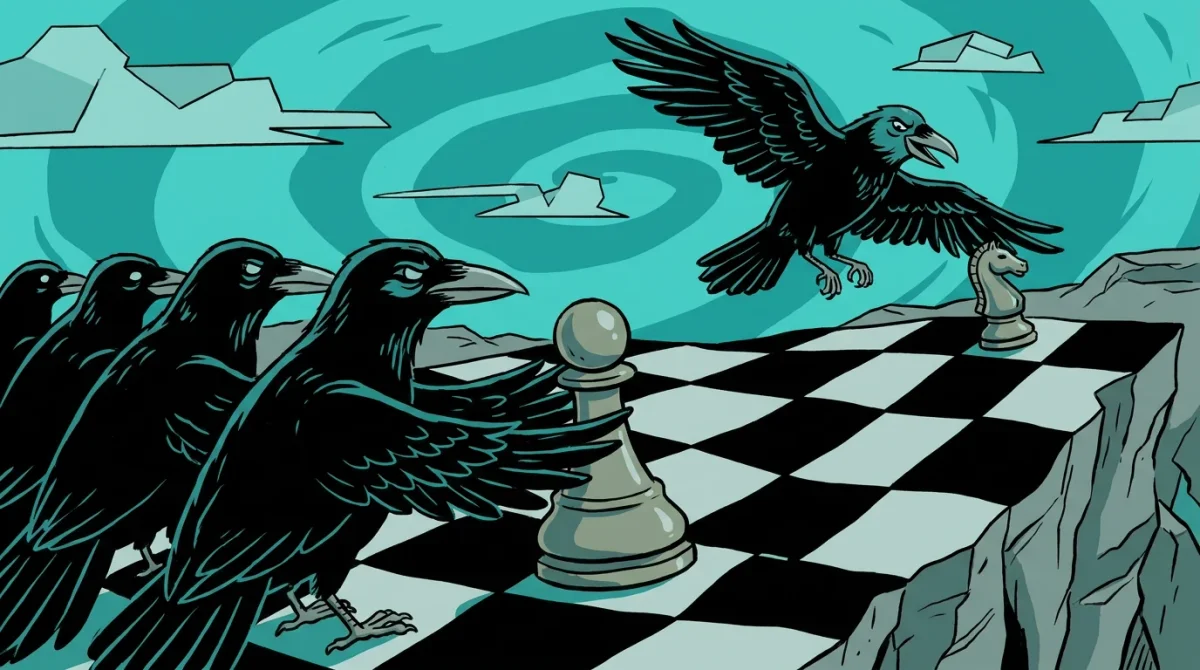
When everyone uses the same AI, everyone makes the same moves, and nobody gets ahead. The winner brings something the others can’t get.
Everyone got the same new move
Game theory is the study of choices amongst competition. Your best move depends on what everyone else does.
A few years ago, AI was a move only some people had.
Now almost everyone has the same few tools, at the same price. Ask AI for a plan, and your competitor gets nearly the same one.
A move everyone has is not an edge
Give every runner in a race the same new shoes. Everyone runs faster, and the finish order stays the same.
AI works the same way. Studies of writers and consultants found their work got better and more alike.
You still can’t skip AI. Stop using it, and you fall behind. AI now buys your place in the race, not the win.
Winners change the game
You win big when you hold something the other players don’t. Game theory calls that an asymmetry.
The biggest AI companies hold one. They own the data and the computers, and everyone else rents from them.
You need an asymmetry of your own, and a $20 subscription won’t buy it.
Three moves nobody can copy
Your competitors’ AI never gets three things.
What you’ve learned. Which pitch closed last month’s deal. Which email got replies. No AI knows it, because nobody posted it.
Who you know. Peers who tell you what really works. Trust takes years, and AI can’t fake it.
What you own. Tools and data nobody can reprice or take away.
Feed these into your AI, and your answers stop looking like everyone else’s.
Your network brings the new moves
Other people give you the best new moves.
AI learned from the internet, so it knows what everyone knows. Your peers know what works this month, before anyone writes it down.
So the winning play takes two steps. Learn something new from people you trust. Then have your AI put it to work.
We call that asymmetric AI: the same AI as everyone, with inputs nobody else has.
Try it this week
Pick one task you repeat, like follow-up emails.
Ask three people in your field what works for them now. Give their answers to your AI, and compare the result.
Common questions
What does game theory say about everyone using AI?
When every player has the same tool, the tool stops deciding who wins. Using it becomes the price of staying in the game. The winner is whoever brings something the others can't get.
How do you make a move competitors can't copy?
Use AI with things only you have: what you've learned, people who trust you, and tools you own. Others can copy your AI. They can't copy those.