
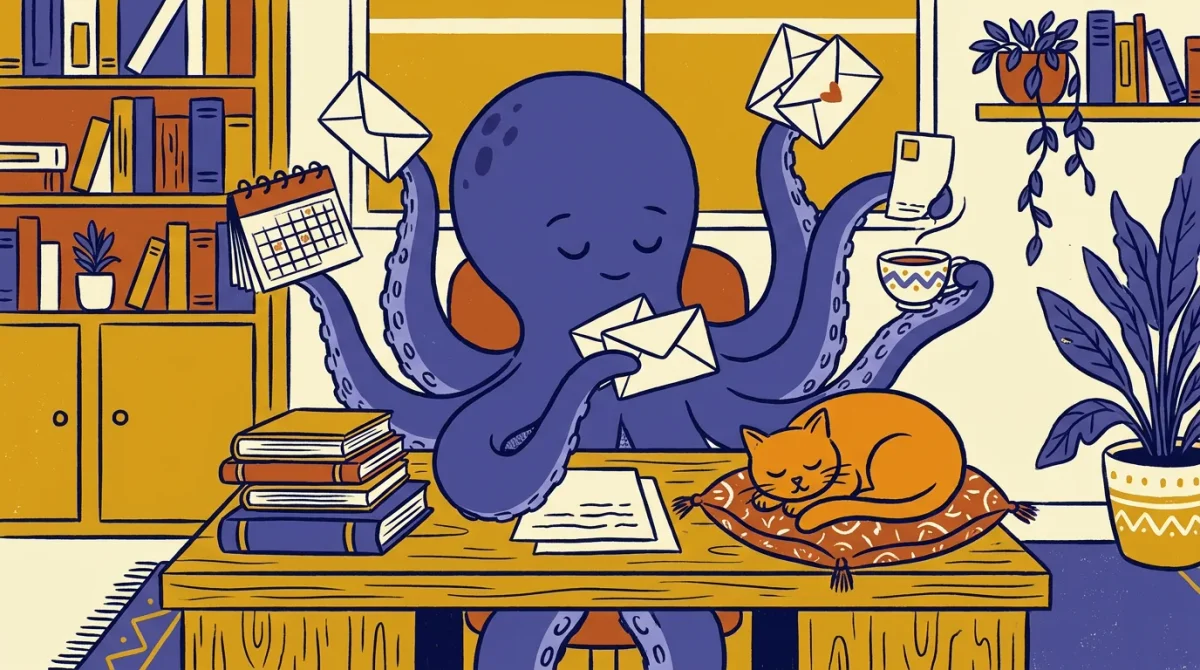
An AI chief of staff handles the follow-through that eats much of a human chief of staff’s week: prep, follow-ups, status updates, and loose ends. It can’t hold relationships or make judgment calls. It works best when it learns how you work and you keep the people side.
AI can do the follow-through half of the job
A chief of staff’s week splits into two halves. Follow-through means knowing what changed, preparing for what’s next, and closing loops after every meeting. People work means building trust, settling disagreements, and making judgment calls. AI now does most of the first half and none of the second.
| Human chief of staff | AI chief of staff | |
|---|---|---|
| Morning brief of what changed | ||
| Pre-reads before meetings | ||
| Follow-ups drafted after each meeting | ||
| Weekly status note | ||
| Tracking open commitments | ||
| Managing relationships between leaders | — | |
| Hiring and sensitive people decisions | — |
In a typical day, it does the work that used to slip
At 7am, a short brief lists three emails that need you today, one moved meeting, and a deal that went quiet. Before the board call, a one-page pre-read pulls the latest numbers and last time’s questions. After each meeting, a follow-up waits in your drafts, and you send it with one edit. On Friday, it writes the status note from the week’s email and calendar, and you add one line about next week.
ChatGPT can’t be one
A chatbot forgets you between conversations, so you re-explain your work every time. It waits for you to ask, so nothing happens unless you remember. It can’t see your inbox or calendar, so you paste in everything it needs. Personal AI agent vs. chatbot goes deeper.
It needs four things to work
- Its own agent that works only for you, so it learns your work instead of everyone’s.
- Access to your email, calendar, and documents, so it acts without copy and paste.
- Standing orders: recurring jobs it runs on a schedule unasked.
- Memory of your corrections, so you coach it once.
It breaks on anything that runs on trust
An AI can draft the hard email but can’t judge when to send it or when to call instead. It can summarize a tense meeting but can’t repair the relationship. Politics, hiring, and difficult conversations still need a person. Keep the AI on follow-through, and approve anything it sends outside your team.
Start with one recurring job
A Friday status note makes a good first job, because you can check it in two minutes. Let the AI write it for two weeks and correct it each time. Once it runs on its own, add the next job, such as meeting pre-reads.
Bottom line: An AI chief of staff takes over the follow-through: briefs, pre-reads, follow-ups, and status notes. Keep the people side for yourself. PageLines gives each member a personal agent that works in their own tools and learns how they work, inside a community of AI leaders. See how it works.
Common questions
What is an AI chief of staff?
An AI chief of staff is an AI agent that handles an executive's follow-through: morning briefs, meeting prep, drafted follow-ups, status notes, and tracking open commitments. It works in your email and calendar and learns how you like things done.
Can an AI chief of staff replace a human one?
No. It takes the routine half: prep and follow-through. It can't hold relationships, read a room, or judge people, so a human still owns those.
How do I start with an AI chief of staff?
Pick one recurring job, such as a Friday status note, and have the AI do it for two weeks. Correct it each time, then add the next job once the first one runs on its own.